Table of Contents
Table of Contents
Introduction
There’s something quietly powerful about a “passion project.” Whether it’s writing, painting, learning an instrument, or even exploring a videogame world — these pursuits often start small, almost shyly. Yet they carry within them the seeds of transformation. In a world saturated by obligations and outcomes, a passion project becomes a space of permission: permission to play, to explore, to fail, to reimagine. In that sense, passion project nba 2k26 isn’t merely about mastering a videogame: it symbolizes what any creative, growth-oriented endeavour can be. It becomes a doorway to mindset, self-discovery, and creative expression.
In this two-part essay, we’ll explore why passion projects matter — not as hobbies to digest spare time, but as deliberate spaces for growth. We’ll look at mindset, psychology, creativity, and how even unlikely passions can shape who we become. Consider this a reflective walk with a trusted friend — one who believes that your inner spark is worth nurturing.
The Hidden Power of Play and Passion Projects
A childhood spark
Imagine a childhood memory: maybe you spent hours dribbling a ball against a wall, sketching doodles in a notebook, or endlessly replaying levels in an old videogame. At the time, it felt like nothing more than fun. But decades later, you realize those hours weren’t wasted — they shaped your instinct to explore, tinker, and return.
That’s the quiet magic of a passion project. It doesn’t demand results or deliverables. Instead, it offers a space where you can be curious without judgment, where mistakes are just signs you’re trying. This is especially true for projects like passion project nba 2k26: what begins as playing a game for joy can evolve into learning teamwork, strategy, perseverance — even leadership.
When small joys become fertile ground
In adulthood, many of us mistake productivity for meaning. But sometimes growth blooms from simple joys. A late-night sketch, a few minutes composing music, or returning to a game that once gave you excitement — these moments are fertile ground for curiosity, self-knowledge, and resilience.
Treating such projects with seriousness — not as guilty pleasures but as valid creative work — changes everything. In that shift we reclaim part of ourselves that often gets buried beneath appointments, bills, and deadlines. That small spark becomes a refuge, a laboratory for our inner growth.
Mindset Matters: Growth, Process, and Psychological Fuel
The power of a growth mindset
At the heart of meaningful passion projects lies mindset. The research of Carol Dweck and the concept of the growth mindset remind us that skills, intelligence, even creative capacities are not fixed. They can be developed through effort, reflection, and perseverance. (fs.blog)
When you approach a passion — whether a game, a painting, or a poem — not as a test of talent but as a space for learning and growth, you open the door to transformation. You begin to view failures not as proof of incapacity, but as stepping stones. A missed shot in a game becomes data. A sketch that doesn’t quite work becomes insight. This shift — from proving ability to embracing process — can change everything.
From perfectionism to exploration
Many of us approach creative ventures (or even games) with an unspoken pressure: must be good, must be perfect, must be impressive. That kind of perfectionism kills joy. It stops you before you even start.
By contrast, a growth-oriented mindset encourages experimentation, play, and curiosity. It encourages you to say: “Let me try,” or “What if I do this?” Without the burden of perfection, the creative process becomes freer, more daring, and more authentic. In writing, many authors describe beginning without knowing the full shape of the story — trusting that clarity will come along the way. (janefriedman.com)
For someone exploring passion project nba 2k26, this might mean trying new strategies without fear of failing, collaborating or competing with humility, or allowing the game to be a space for experimentation — not just to win, but to learn, adapt, and grow.
Creativity as a Practice: Why Structure Helps Imagination Flourish
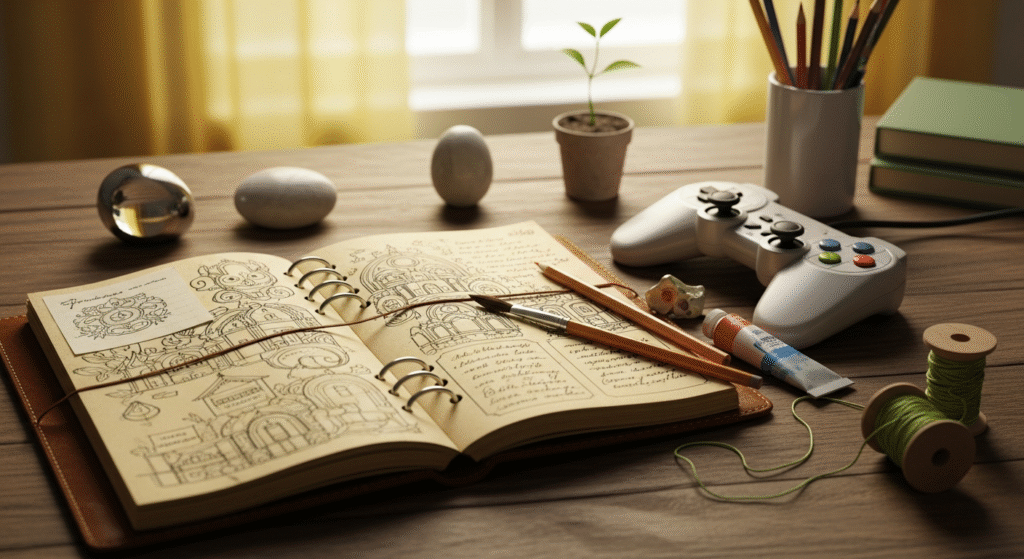
Creativity isn’t accidental
Creative breakthroughs rarely come from “waiting for inspiration.” More often, they arise from practice, structure, and persistence. Think of creativity not as a mystical gift but as a muscle: the more you use it, the stronger it becomes.
A structured approach doesn’t dampen creativity — it supports it. When you build small routines, carve out time, give yourself permission to play and fail, the mind begins to trust itself. It knows this space is safe. That’s where good ideas emerge.
The science of creative thinking
Modern cognitive science supports this view. Research in creative cognition suggests that creativity often arises when our minds enter a more associative, loosely framed mode — when we allow ourselves to wander mentally, draw unexpected connections, and explore without immediate judgment. (arxiv.org)
Within that flow, constraints — rather than limiting us — can catalyze creativity. Limiting time, materials, rules or even deciding to work with a self-imposed restriction challenges the mind to think differently, to improvise, to innovate. Many creatives speak of their “best work” coming from constraints. (megafishbein.com)
So whether you approach painting, writing, game-design, or even gaming itself — giving yourself a structure, a container — doesn’t block imagination. It invites it in.
When Passion Meets Real Life: Lessons from Unexpected Places
Game as metaphor
It might seem surprising — but a game like NBA 2K26 (or any immersive videogame) can reflect much more than skill or competition. It becomes a microcosm of challenges, failures, adjustments.
Imagine sitting down late at night, controller in hand, facing a tough opponent. You lose a match. You reflect, regroup, try a different strategy. Over time, playing becomes not about perfect scores — but about learning teamwork, adaptability, reading patterns, understanding risk and reward.
Apply that to life: facing a setback at work, stumbling in a relationship, struggling with your own ambitions. The lessons are the same: regroup, adapt, try again. The resilience you build in a game can carry over to real challenges.
Real-world transformation
I once spoke with a friend, a graphic designer, who told me she began re-learning drawing because of an old hobby — digitally sketching characters in games during college. At first it was fun. But over months she discovered enjoyment in the process, in improvement, in quietly building skill. That hobby eventually became a side freelance venture.
What started as playful, inconsequential side-time turned into a meaningful creative outlet. More importantly, it reactivated something inside her — curiosity, confidence, self-expression — that had long been dormant.
In that sense, a passion project is never “just a hobby.” It’s often an invitation — to creativity, to self-understanding, to new possibilities.
Where to Go Next
If you feel a spark — a curiosity, a flicker of interest, a desire to explore — honor it. Give it time. Build a small, protected space for it. Maybe that space is evenings after dinner. Maybe it’s weekends. Maybe it’s a few minutes each morning before the world wakes.
Use tools and systems that help you stay consistent. Treat your passion with seriousness — as a personal laboratory for growth. And when you doubt yourself… remember that growth, not perfection, is the true aim.
In Part 2, we’ll dive deeper: how to turn passion into progress, how to overcome resistance, how to integrate these practices into life — and what happens when you do.
Discover more resources on creativity and growth at Passion-Project.net — your reliable and inspiring companion for change.
Every passion project begins with a quiet moment — a spark of interest, a flicker of excitement, a subtle tug toward something meaningful. But the real transformation happens not in the spark, but in what follows: the decision to nurture it, to stay with it, to build something from it. Whether you’re exploring a creative idea, cultivating a new skill, or even diving deeper into a game like passion project nba 2k26, the shift from inspiration to commitment marks a turning point. It’s the moment you stop waiting for the “right time” and begin shaping that time yourself.
What follows is an exploration of how to turn that initial curiosity into an enduring source of growth. We’ll look at mindset, behavior, psychology, and the emotional mechanics of staying engaged with what matters to you — even when life gets loud, even when you feel resistance, even when doubt creeps in.
From Curiosity to Commitment
Why small beginnings matter
Most people assume that meaningful work requires a dramatic start — a perfect schedule, the right tools, the ideal environment. In reality, greatness often grows from humble beginnings. Ten minutes a day spent exploring a skill or interest can shape a future version of yourself you don’t yet recognize.
Consider someone who begins experimenting with digital art because of an interest sparked while customizing players in NBA 2K years ago. At first, it’s casual, playful, exploratory. But gradually, those ten-minute sessions evolve into a rhythm, a practice, a craft. What once seemed random becomes a defining part of their identity, even their career.
Small beginnings work because they bypass intimidation. They allow creativity to unfold naturally, without pressure or expectation. And once momentum forms, commitment follows.
The psychology of sustainable progress
Progress rarely feels like progress in the moment. It feels slow, repetitive, sometimes disappointing. But beneath that surface is a deeper psychological process: you’re building resilience, neural pathways, confidence, and identity.
Research on motivation shows that consistent, small-scale effort reshapes your internal narrative: instead of “I wish I could,” you begin to think “I am someone who does this.” That identity shift is what makes passion sustainable.
You no longer rely on bursts of motivation — you rely on practice. You show up because that’s who you’ve become. And over time, that quiet consistency carries you further than intensity ever could.
The Resistance Within: Why We Struggle to Start
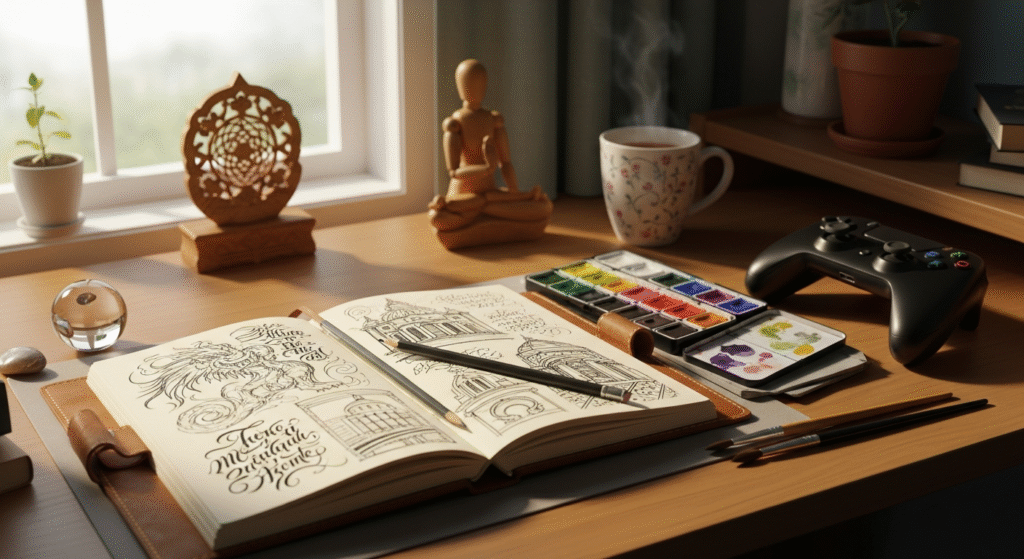
Creative fear
Every passion project encounters resistance — internal fear disguised as busyness, procrastination, distraction, or uncertainty. This fear often whispers convincing lies:
“You’re not good enough.”
“You’re too late to start.”
“No one will care.”
“You’ll fail.”
But the truth is this: resistance is a sign that something matters. If you were indifferent, there would be no fear. The presence of fear means you care deeply, which is precisely why the work is worth doing.
The comfort of avoidance
Avoidance is comforting. It protects us from failure, discomfort, and vulnerability. But it also prevents growth. Think of the times you’ve avoided starting something you cared about — not because you lacked desire, but because you feared what it might reveal about you.
Passion projects challenge this avoidance. They invite you to choose curiosity over comfort, exploration over stagnation. Even small steps — opening a notebook, starting a new save file, exploring a tutorial — weaken avoidance and strengthen your ability to act.
Once you begin, resistance loses its grip.
Systems That Support Your Passion
Designing an environment for creativity
Creativity thrives in environments that support it. This doesn’t require elaborate studios or expensive tools. It simply requires intentional signals: a tidy desk, a particular playlist, a physical notebook reserved for your ideas, or even a specific time of day dedicated to your passion.
Environmental cues help the mind shift into creative mode more easily. They reduce friction. They remind your brain: “This is where I do my work.”
Even gamers building a passion project nba 2k26 journey know the importance of environment — comfortable lighting, a familiar setup, space for focus — because environment shapes attention, motivation, and performance.
Rituals, rhythms, and micro-habits
Rituals anchor your creative life. They act as psychological doorways. A cup of tea before writing. Five minutes of warm-up sketches. A short walk before brainstorming. These rhythms stabilize your process and make it easier to stay consistent.
Micro-habits — tiny actions performed daily — compound into remarkable progress. They make creativity accessible even on difficult days. And by removing pressure, they protect joy.
A five-minute daily practice can change your relationship with your craft far more than an occasional burst of inspiration ever will.
The Power of Community and Collaboration

Being seen changes everything
A passion project often begins alone, but it grows through connection. Sharing your progress with others — even a small circle — can dramatically deepen your sense of purpose. Being seen creates accountability, motivation, and emotional reinforcement.
Whether it’s a writing group, a creative forum, or online communities built around games or artistic practice, the presence of others amplifies your commitment. You begin to feel part of something larger — a network of people who understand the emotional highs and lows of creative exploration.
Feedback as fuel
Helpful feedback accelerates growth. It offers new perspectives, reveals blind spots, and helps you refine your craft. While feedback can feel vulnerable, it is one of the most powerful catalysts for improvement.
In creative communities — including gaming circles, design hubs, and writing groups — feedback isn’t about judgment. It’s about clarity. It’s about helping each other move closer to mastery.
The key is openness: learning to listen, discern, and incorporate what resonates without losing your voice.
Integrating Passion Into Everyday Life
Negotiating your creative energy
Life is busy, and passion projects can easily be pushed to the margins. Integrating them requires negotiation — understanding your energy patterns, your responsibilities, and your rhythms.
Ask yourself:
When am I most alert?
What drains my energy fastest?
What activities replenish me?
By mapping your energy, you can assign the right tasks to the right times. Creative work during your peak focus hours. Administrative tasks during your low-energy moments. Rest when your body signals burnout. This kind of intentional alignment protects both productivity and wellbeing.
Protecting your spark
Once a passion project becomes meaningful, it deserves protection. That means setting boundaries — saying no to unnecessary obligations, carving out time even when it’s inconvenient, and resisting the urge to turn passion into performance.
Your project doesn’t need to impress anyone. It doesn’t need to be monetized. It doesn’t need to meet external expectations. Its value comes from what it awakens in you — curiosity, growth, courage, imagination.
Protecting your spark means honoring your pace. Trusting the process. And remembering that depth is built slowly, with patience and devotion.
Final Reflections & Where to Go Next

Every passion project is a journey into your inner landscape — your desires, your fears, your potential. Whether you’re writing, designing, crafting, learning, or exploring worlds like passion project nba 2k26, the process teaches you who you are and who you can become.
In Part 3, we’ll explore the final dimension of this process: how passion projects shape identity, create long-term transformation, and open paths you never expected. We’ll look at real stories, practical frameworks, and the deeper emotional truths behind creative growth.
Until then, give your curiosity a place to breathe. Let it evolve. And when you’re ready for more guidance, insights, and creative support, explore the growing library at Passion-Project.net — your steady companion for growth, creativity, and meaningful change.